
If you notice a musty smell, dark spotting on walls or ceilings, or worsening allergy symptoms within 24 to 48 hours of a summer storm, you likely have active mold growth that needs prompt attention. Mold only needs moisture, warmth, and time, and a South Florida summer supplies all three. This guide covers what to look for, the health risks, and the point where a quick wipe-down is no longer enough.

Why South Florida summer storms drive mold growth

Mold spores are already in the air everywhere. What they need to bloom into a colony is water and humidity, and the summer storm season delivers both. Heavy afternoon rain pushes moisture through roof gaps, window frames, and wall penetrations, while outdoor humidity routinely sits above 70 percent. Indoors, that moisture soaks into drywall, carpet padding, baseboards, and framing, where it can stay damp for days after the sky clears.

Mold can begin to establish within 24 to 48 hours of a surface staying wet. That short window is why storm-related mold so often surprises homeowners. The water may have entered during a single storm, but the growth continues quietly long after everything looks dry on the surface.

The visible signs of mold after a storm

Visible mold is the sign most people recognize, but it does not always look the way people expect. Watch for:

  • Black, green, gray, or white spotting on drywall, ceilings, or baseboards
  • Fuzzy or slimy patches in corners, behind furniture, or under sinks
  • Discoloration or staining that spreads outward from a water mark
  • Peeling, bubbling, or warping paint and wallpaper
  • Warped baseboards or trim that pulled away from the wall after getting wet

A single small spot on a hard, non-porous surface is often manageable. Spotting that covers a large area, keeps coming back, or appears on porous materials like drywall and carpet points to a deeper moisture problem that surface cleaning will not solve.

The smells and symptoms that signal hidden mold

Not all mold is visible. Growth inside a wall cavity, above a ceiling, or under flooring can stay hidden while it spreads. In those cases, your nose and your body are the early warning system.

A persistent musty, earthy, or damp-basement odor is one of the most reliable indicators of hidden mold, especially when it gets stronger in one room or after the air conditioning runs. On the health side, occupants may notice worsening allergy-type symptoms that improve when they leave the house: nasal congestion, sneezing, coughing, itchy eyes, throat irritation, or headaches. People with asthma or weakened immune systems can react more strongly. If symptoms track with time spent in a specific room, treat that as a lead worth investigating.

Where mold hides after storm-driven water intrusion

After a storm, mold tends to follow the path the water took. The most common hiding spots include:

  • Inside wall cavities behind wet drywall
  • Under carpet and in carpet padding
  • Beneath vinyl, laminate, or wood flooring
  • Above ceiling tiles and in the attic near roof leaks
  • Around window and door frames
  • Behind baseboards and under cabinets

Because these areas are out of sight, the damage often looks minor from the room while it is significant inside the assembly. This is also why drying a carpet or repainting a stain frequently fails: the moisture source and the growth are behind the surface, not on it.

When it is a DIY cleanup versus a professional remediation

A small area of surface mold, roughly the size of a dinner plate or less, on a hard non-porous surface can often be cleaned by a homeowner with proper protection and ventilation. Anything beyond that deserves a professional assessment. Call for remediation when:

  • The affected area is larger than about 10 square feet
  • Mold is on or inside porous materials like drywall, insulation, or carpet
  • The musty smell or growth keeps returning after cleaning
  • The moisture source is unknown or still active
  • Anyone in the home has respiratory conditions or a compromised immune system

Professional mold remediation does more than remove what you can see. It contains the work area to stop spores from spreading, removes affected materials safely, dries the structure, and addresses the moisture source so the problem does not return.

Why air quality testing matters after a storm

When mold is hidden or symptoms persist without an obvious source, testing removes the guesswork. Air quality testing measures spore levels indoors and compares them to outdoor baselines, which helps confirm whether a problem exists, how widespread it is, and, after remediation, whether the cleanup actually worked. Testing is especially worthwhile when someone in the home is having health symptoms, when you are buying or selling, or when a musty odor has no visible cause.

When to call C2C

C2C Restoration is a Florida veteran-owned restoration contractor serving Broward, Palm Beach, and Southwest Florida, and we are available 24/7. If you have visible mold larger than a small patch, a musty smell that will not clear, or health symptoms that ease when you leave the house, call us for an assessment before the growth spreads further. The sooner the moisture source is found and dried, the smaller and cheaper the fix.

Call C2C Restoration 24/7 to schedule a mold assessment across Broward, Palm Beach, and Southwest Florida.
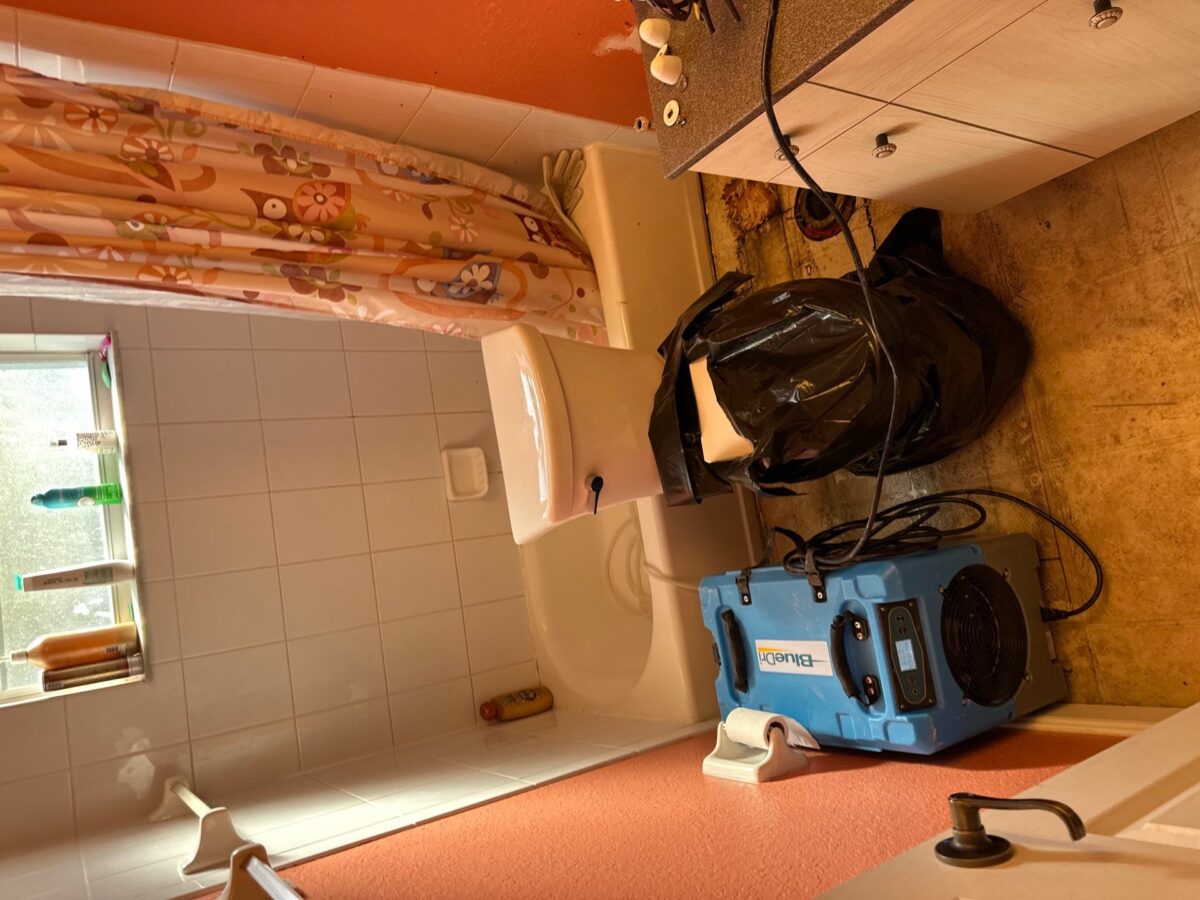
The earliest roof leak warning signs are usually indoors, not up on the roof: ceiling and wall stains, peeling paint, a musty smell in an upstairs room, or granules collecting near downspouts. Catching them before the next Broward or Palm Beach storm is the difference between a small repair and a ceiling that comes down. Here is what to look for while the weather is still calm.

Why roof leaks spike during Broward and Palm Beach storm season

South Florida roofs take a beating in summer. Intense sun degrades shingles and sealant year-round, then storm season adds wind-driven rain, uplift, and flying debris. A roof that shed water fine in the spring can develop gaps at flashing, vents, and shingle edges that only leak once rain is driven sideways at 40 miles per hour.

The trouble is that small openings rarely announce themselves during the storm that creates them. Water finds the gap, travels along framing, and shows up as a stain days later, often far from the actual entry point. That delay is exactly why a pre-storm inspection pays off: the goal is to find and close the gap before the next system arrives to exploit it.

Warning signs you can spot from the ground

You do not need to climb up to catch most early problems. From the yard or an upstairs window, look for:

  • Missing, cracked, curling, or lifted shingles
  • Shingle granules collecting in gutters or at the base of downspouts
  • Dark streaks or sagging areas on the roof plane
  • Damaged, rusted, or lifted flashing around chimneys, vents, and skylights
  • Debris packed into valleys where water is supposed to run off

Any of these means the roof surface is no longer sealing the way it should. On tile roofs, watch for slipped, cracked, or missing tiles and for exposed underlayment, which is the real waterproofing layer beneath the tile.

Warning signs inside your home and attic

Indoors is where leaks usually show first, so treat these as urgent:

  • Brown, yellow, or ring-shaped stains on ceilings or walls
  • Peeling, bubbling, or blistering paint near ceilings
  • A persistent musty or damp smell in upstairs rooms or closets
  • Sagging or soft spots in the ceiling
  • Daylight visible through the roof boards when you are in the attic
  • Wet insulation, water tracks on rafters, or dark staining on the attic decking

The attic is the best early-warning zone because you can often see moisture there long before it soaks through to the finished ceiling below. If you can safely check it after a heavy rain, do so.

What roof damage looks like after a wind event

After a named storm or a strong squall, the signs shift. Look for shingles or tiles scattered in the yard, a section of roof that suddenly looks different from the rest, bent or missing vent caps, and flashing that has peeled back at the edges. Interior signs can lag by a day or two, so a stain that was not there before the storm is a strong signal that wind opened a new path for water.

Document what you find with photos and dates. If the damage traces to a specific storm, that record matters for both the repair scope and any insurance conversation that follows.

Why early detection beats waiting for a drip

By the time water is actively dripping, it has usually been traveling through your roof assembly for a while. That means wet insulation, damp framing, and the beginnings of mold, all hidden above the ceiling. Professional roof leak detection finds the true entry point, which is often uphill and to one side of where the stain appears, so the repair addresses the source rather than the symptom. Catching a leak early keeps it a roofing repair instead of a roofing repair plus a structural drying and remediation project.

Roof leak versus water damage: what needs which service

A roof problem and the damage it causes are two separate jobs. Detecting and sealing the leak stops new water from entering. Everything the water already touched, wet drywall, saturated insulation, stained ceilings, and any mold that started, falls under water damage restoration, which dries the structure, removes unsalvageable materials, and restores the space. A thorough response handles both: stop the source, then dry and repair what it reached. Skipping the second half is how a fixed leak still turns into a mold problem weeks later.

When to call C2C

C2C Restoration is a Florida veteran-owned contractor serving Broward, Palm Beach, and Southwest Florida, available 24/7. If you have spotted ceiling stains, missing shingles, granules in the gutters, or any sign of moisture in the attic, get it inspected before the next storm turns a small gap into an interior flood. Early detection is almost always the cheaper path.

Call C2C Restoration 24/7 for roof leak detection and water damage help across Broward, Palm Beach, and Southwest Florida.

The earliest signs of an AC condensate leak are usually water or dampness around the indoor air handler, a musty smell near the vents, and a ceiling or wall stain directly below the unit or its drain line. In South Florida, where air conditioners run nearly year-round and pull enormous amounts of moisture from the air, a slow condensate leak is one of the most common and most overlooked sources of hidden water damage. Here is how to catch it before it spreads.

What an AC condensate leak is and why it is common here

Your air conditioner does more than cool air; it dehumidifies it. As warm, humid air passes over the cold evaporator coil, water condenses out and drips into a pan, then flows out through the condensate drain line. In a South Florida summer, a single system can remove several gallons of water from the air every day.

That is a lot of water moving through a small pan and a narrow drain line. When the line clogs with algae or debris, the pan cracks or rusts, or the line disconnects, that water has to go somewhere. Instead of draining outside, it overflows onto whatever is below the air handler: a ceiling, a closet floor, an attic platform, or the wall behind the unit. Because the leak is slow and steady, it often runs for weeks before anyone notices.

Early warning signs of a condensate leak

The sooner you catch a condensate leak, the less it costs to fix. Watch for:

  • Water pooling or dampness around the base of the indoor air handler
  • A full or overflowing drain pan
  • Water stains on the ceiling or wall directly below the unit or along the drain line
  • A musty or moldy smell coming from the vents or the air handler closet
  • The system short-cycling or the safety float switch shutting the unit off
  • Higher humidity indoors even while the AC is running
  • Rust or corrosion on the drain pan or line fittings

The float switch shutting your system off is actually a feature, not a failure. It is telling you the pan is backing up. Do not simply reset it and move on; that water is going somewhere.

The hidden water damage a slow leak causes

The danger with a condensate leak is that the visible clue is small while the damage behind it is not. Air handlers are often installed in ceilings, attics, and closets, so the overflow soaks into materials you never see:

  • Wet and sagging drywall on the ceiling below the unit
  • Saturated insulation that loses its R-value and stays damp
  • Water tracking down wall cavities and into baseboards
  • Warped or delaminating flooring beneath a closet unit
  • Framing that stays wet long enough to support mold growth

Because the moisture is warm, dark, and constant, an air handler leak is close to ideal conditions for mold. It is common to open up a stained ceiling under an AC unit and find growth that has been developing quietly for weeks.

Why summer humidity makes AC leaks worse

In peak summer, your system runs longer and produces more condensate than at any other time of year, so a marginal drain line that coped in cooler months can overflow under the summer load. High indoor humidity also means any water that escapes evaporates slowly and keeps surfaces damp longer, extending the window for mold. In short, the season that makes your AC work hardest is the same season that turns a minor drain issue into an active leak.

What to do the moment you spot a leak

If you find water around the air handler or a fresh stain below it, act quickly:

  1. Turn the system off at the thermostat to stop it from producing more condensate.
  2. Soak up standing water and place a container under the drip to protect the floor.
  3. Check whether the drain pan is overflowing and whether the float switch has tripped.
  4. Do not just reset the switch and keep running the unit; the backup will return.
  5. Photograph the water and any stains before you clean up, in case of an insurance claim.

The first day matters most. Our guide on what to do in the first 24 hours after water damage walks through the immediate steps that keep a small leak from becoming a mold and structural problem.

Professional detection versus guessing

A condensate stain on the ceiling tells you water arrived, not where it started or how far it spread. Professional AC leak detection traces the leak to its source, whether that is a clogged line, a failed pan, or a disconnected fitting, and maps how much of the surrounding structure got wet using moisture meters rather than guesswork. That matters because drying only what you can see leaves damp material inside the assembly, which is precisely where mold takes hold. Finding the full extent early keeps the repair small.

When to call C2C

C2C Restoration is a Florida veteran-owned restoration contractor serving Broward, Palm Beach, and Southwest Florida, available 24/7. If you have found water near your air handler, a stain below the unit, or a musty smell from the vents, call us before the hidden damage spreads through the ceiling and framing. A condensate leak caught early is a simple fix; one left running becomes a remediation job.

Call C2C Restoration 24/7 for AC leak detection and water damage help across Broward, Palm Beach, and Southwest Florida.

If you have water damage in your Sunrise home or business, act within the first 24 hours: stop the water source, shut off power to affected areas if it is safe, move belongings out of standing water, start removing water and moisture, and document everything for your insurance claim. In South Florida’s humidity, mold can begin to grow within 24 to 48 hours, so speed matters. C2C Roofing & Restoration is based right here in Sunrise and responds 24/7. Call (844) 422-2379 for a fast local response and a free inspection.

Why the first 24 hours decide the size of the loss

Water spreads fast and it does not stop at what you can see. It wicks into drywall, subfloor, cabinets, and insulation, and in a humid climate an unaddressed leak or an AC condensation line can turn into mold within 24 to 48 hours. West Broward weather is a big driver of the water damage we see in Sunrise: heavy summer thunderstorms and the June to November hurricane season bring roof leaks, wind damage, and flooding, and the area’s many canal- and lake-adjacent communities raise the flood risk.

The first 24 hours: a checklist

  1. Stop the source. Shut off the main water supply for a burst pipe or appliance line. For a roof leak or storm intrusion, contain it and get emergency tarping or board-up in place.
  2. Protect people first. If water is near outlets, the panel, or wiring, shut off power to the affected area only if you can reach the breaker safely. If not, stay clear and call a professional.
  3. Move what you can. Lift furniture and get belongings, documents, and electronics out of standing water.
  4. Start removing water and moisture. Remove standing water and increase airflow. Standing water and trapped moisture are what feed mold.
  5. Document everything for insurance. Photograph and video every affected room and item before you move or discard anything. C2C documents the loss and bills your insurance carrier directly, and we assist with the claim from inspection through completion.
  6. Call a licensed local restoration contractor. Professional extraction, structural drying, and dehumidification stop the damage from becoming a mold problem.

How fast does mold really grow?

In South Florida’s humidity, mold can begin to grow within 24 to 48 hours of water intrusion. That is why “dry it out this weekend” is a mistake. The faster the moisture is professionally removed, the smaller the eventual repair. If mold has already started, licensed mold remediation (containment, HEPA filtration, removal of affected materials, and clearance) is the right path, not bleach and a fan.

What your insurance needs from you

Insurers want proof of the loss and proof you acted to prevent it from getting worse. Photos, video, and a professional damage assessment all help. C2C works directly with your insurance carrier throughout the claim, which keeps the process moving and takes the paperwork off your plate.

Why a local Sunrise crew matters

Restoration is a clock-driven job, so the crew that reaches you first has the advantage. C2C Roofing & Restoration is headquartered right here in Sunrise at 5305 NW 108th Ave, so our crews and equipment are based in the city we serve. That lets us reach any Sunrise address quickly, across Sawgrass, Bonaventure, Welleby, Springtree, Sunset Strip, and Sunrise Golf Village, and the ZIP codes 33313, 33322, 33323, 33325, 33326, 33345, and 33351. We are veteran-owned (SDVOSB) and Florida-licensed: GC CGC1524408, Roofing CCC1335660, Mold MRSR2680. We also handle fire and smoke damage and serve the wider Broward County area.

Frequently asked questions

Are you available 24/7 in Sunrise?

Yes. C2C is based in Sunrise and provides 24/7 emergency response for water, mold, fire, and storm damage every day of the year.

How fast can you respond in Sunrise?

Because our HQ is in Sunrise, we dispatch local crews quickly across the city. Call (844) 422-2379 and we will give you an ETA for your address.

Do you work directly with my insurance?

Yes. We document the loss and bill your insurance carrier directly, and we assist with the claim from inspection through completion.

What areas of Sunrise do you serve?

All of Sunrise, including Sawgrass, Bonaventure, Welleby, Springtree, Sunset Strip, and Sunrise Golf Village, across ZIPs 33313, 33322, 33323, 33325, 33326, 33345, and 33351.

Water damage in Sunrise does not wait

And neither should you. C2C Roofing & Restoration responds 24/7 with a local crew based in Sunrise. Call (844) 422-2379 for a fast response and a free inspection.